


📋 Table of Contents
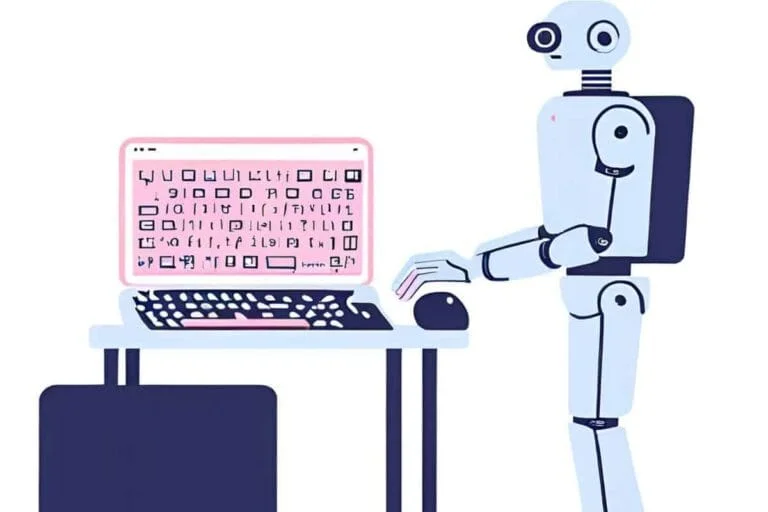
The Robot Syndrome: Why AI Writes Poorly
AI excels at synthesizing information and rapid text generation. But it falls short due to its lack of empathy, humor, and the subjectivity that makes a text authentic. The result? Often bland, repetitive content devoid of personality. It’s a bit like listening to a scratched record: the information is there, but the emotion is absent. This impersonal style can harm your credibility and audience engagement. A cold and distant text will leave no trace in the reader’s mind. The goal is to transform this robotic prose into a captivating and memorable narrative.
Humanizing AI: The Survival Guide
So, how do you give a soul to a machine-generated text? Here are some avenues to explore:
- Careful proofreading: Don’t just glance over it. Take the time to read each sentence aloud to detect awkward phrasing, repetitions, and inconsistencies.
- Adding personal experiences: Integrate anecdotes, memories, or personal reflections to give depth and authenticity to your text. It’s a bit like adding a pinch of salt to a bland dish: it enhances the flavor!
- Working on style: Vary sentence structures, use rich and evocative vocabulary, and don’t hesitate to employ figures of speech (metaphors, similes, etc.) to make your text more lively and impactful.
- Adapting to the target audience: Adapt the tone and vocabulary of your text to your audience. An article intended for experts will not be written in the same way as a social media post.
Camouflage Techniques: Transforming AI into Human
To trick the reader, here are some additional tips:
- Injecting emotion: AI struggles with feelings. Add adjectives and adverbs that express joy, sadness, anger, etc.
- Playing with humor: A well-placed touch of humor can lighten the atmosphere and make your text more accessible. But be careful not to overdo it!
- Asking questions: Engaging the reader is an excellent way to maintain their attention and involve them in your narrative.
- Using concrete examples: Illustrating your points with precise and striking examples makes your ideas clearer and more memorable.
The Devil is in the Details: Mistakes to Avoid
Even with the best intentions, it’s easy to make mistakes that betray the artificial origin of your text. Here are some pitfalls to avoid:
- Repetitions: AI tends to repeat the same words and expressions. Hunt down these repetitions and replace them with synonyms or circumlocutions.
- Overly long sentences: AI loves complex and convoluted sentences. Simplify your sentences and break them into shorter, more digestible units.
- Technical jargon: AI tends to use technical and obscure vocabulary. Popularize your content and use clear language accessible to everyone.
- Logical errors: AI can sometimes make reasoning errors. Carefully check the coherence of your text and correct any inconsistencies.
AI, a Tool at Humanity’s Service
Artificial intelligence is not here to replace human writers, but to help them save time and focus on higher-value tasks. By combining the power of AI with human creativity, it’s possible to produce quality texts that are both informative and engaging. It’s a bit like a jazz duo: each brings their own contribution to create perfect harmony. So, the next time you use AI to write a text, don’t forget to infuse it with your own personality. Your audience will thank you.
Conclusion: AI, a Mirror of Our Own Humanity
AI is a powerful tool, but it cannot replace human intelligence. It’s up to us to give it a soul, to infuse it with our own creativity and sensitivity. The result? Texts that resonate with the reader, that move them, that make them think. Ultimately, AI is a mirror of our own humanity. And you, are you ready to take on the challenge?

About Rigaud Mickaël
Passionate about tech and a Linux enthusiast, I decipher AI with a unique and intense vision to make it useful to all, between robots, rock and the geek universe.