
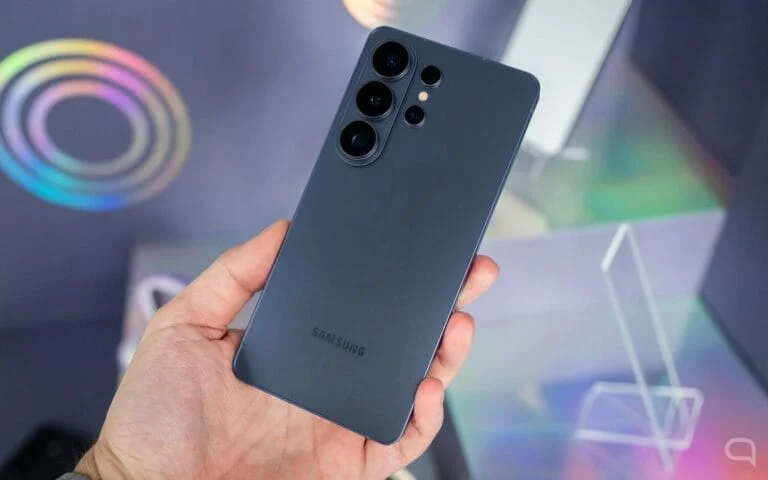

Gone are the hours spent learning Python or Swift. “Vibe coding” is essentially the promise of transforming any idea into a functional application, simply by dictating it to an artificial intelligence. The Language Model (LLM) integrated into your phone takes over, translating your words into software instructions. It’s like having an ultra-fast, always-available developer in your pocket.
From Idea to App: The Simplified Process
Conceive the Idea
The user describes their dream app in natural language to Galaxy AI. No technical jargon, just a fluid and intuitive conversation.
Code Generation
The Language Model (LLM) analyzes the description, identifies key functionalities, and automatically generates the necessary code for the application, both back-end and front-end.
Deployment and Testing
The application is then compiled and can be tested directly on the Samsung smartphone, paving the way for quick and iterative adjustments.
Samsung’s ambition is clear: to democratize software creation. No longer do you need to be an Alex, the full-stack developer who sleeps four hours a night to deliver features. Now, anyone could design hyper-personalized tools. Imagine an app that sends you a weather report targeted to your specific neighborhood, or a step tracker with encouragement that matches your humor. The Korean brand even envisions a new app store, entirely dedicated to these community creations. Of course, initially, these will be simple projects. Not enough to compete with Doctolib or BlaBlaCar right away with complex applications. But the idea is there: to empower everyone to create. Boom.
A Project Still in R&D
For now, Samsung has neither confirmed nor denied the arrival of this feature on its upcoming smartphones. The concept is still under study. This is a classic process in tech, where numerous experiments precede a potential public rollout.
This field is not entirely virgin territory. A challenger has already stepped in this direction. The young brand Nothing, known for its futuristic design, launched an alpha version of “Essential Apps” as early as 2025. Their community can already “vibe code” applications, mostly widgets or mini-games, and share them on a dedicated store. It’s still a bit nascent, clearly, but it shows that the idea isn’t just a Silicon Valley fantasy. This “no-code” or “low-code” trend takes on a new dimension with generative AI. Before, you had to assemble visual blocks. Now, you would simply need to speak. It’s a paradigm shift that somewhat recalls the arrival of graphical interfaces compared to the command lines of early computers. Suddenly, computing becomes accessible to everyone. And that’s where it gets interesting.
Opportunities and Challenges of AI-Assisted Creation
✅ Pros
⚠️ Considerations
One might wonder what this evolution means for professional developers. Will they fear for their jobs? Not so fast. This type of AI won’t replace engineers who build complex architectures for OVH or Google’s systems. Instead, it frees up creativity for smaller tasks, allowing experts to focus on more challenging problems. It’s a bit like the Swiss Army knife of software creation: useful for everything, essential for nothing very specific. The real challenge is redefining the human-machine interface. We’re moving from touchscreens to conversation. The keyboard and mouse paved the way for the personal computer. Gestures and voice democratized smartphones. And now, natural language, supported by AI, promises to open Pandora’s box of software creation. It’s a change that’s shaking up our habits and how we interact with technology.
What is Samsung’s vibe coding concept?
Samsung’s “vibe coding” concept refers to a novel approach to application development that leverages artificial intelligence to translate user intent and creative vision directly into functional code. Instead of requiring traditional programming knowledge, users can describe their desired app’s features, aesthetics, and user experience in natural language. The AI then interprets these descriptions, generating the underlying code and even suggesting design elements to bring the concept to life. This innovative method aims to democratize app creation, allowing individuals without a technical background to build sophisticated applications. It’s about capturing the essence or “vibe” of an idea and transforming it into a tangible digital product, significantly lowering the barrier to entry for aspiring developers and entrepreneurs. The goal is to make app development as intuitive as describing a concept to a designer or a collaborator.
The Competitive Landscape of “Vibe Coding”
CURRENT AI VIBE CODING APPROACHES
Deep Integration & Android Ecosystem
Pioneer & Open Community
Code Generation & Automation for Devs
AI’s role is no longer just to analyze or predict, but to create on command, leaving us with the role of the verbal architect. This prompts a simple question: if everyone can create, what will distinguish good ideas from bad ones? Pure creativity, ingenuity, the ability to solve a real everyday problem – that’s what will truly matter. Ultimately, Samsung’s “vibe coding,” if it comes to fruition, could well redraw the landscape of mobile innovation. It’s no longer the developer holding the magic wand, but the user themselves, armed with their ideas and natural language. Tomorrow, the most useful app might not come from a multi-million dollar startup, but from Sophie, a product manager who was simply fed up with her grocery lists and decided to create it herself.
Chargement de la galerie…

About Rigaud Mickaël
Passionate about tech and a Linux enthusiast, I decipher AI with a unique and intense vision to make it useful to all, between robots, rock and the geek universe.