

Table of Contents
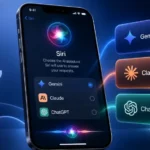
Specifically, imagine this scenario: a WhatsApp conversation about a pizza night. Instead of juggling between the messaging app and the delivery app, you simply ask Gemini, Google’s AI, to scan the discussion and place the order for everyone. No need to copy-paste everyone’s preferences; the algorithm handles it. An even simpler example? Ordering an Uber vocally, with a single phrase. That’s agentic AI: an intelligence capable of understanding a complex objective and executing a series of actions to achieve it. This new feature, launched in “preview” and exclusive to Galaxy S26 and Pixel 10, will initially be limited to the United States and South Korea, with a handful of compatible applications. It’s an experimental phase, where the user still needs to validate actions before execution. It’s a bit like handing your car keys to a learner driver: you stay by their side to make sure everything goes smoothly. But wait, there’s more.
Understand the Intent
AI analyzes the context (conversation, voice) to grasp the user’s need.
Plan the Action
It breaks down the objective into logical steps, identifying the necessary applications.
Execute the Task
AI navigates through applications, fills in fields, and initiates transactions.
Validate & Finalize
The user confirms the action before its finalization, for increased control.
What Samsung and Google have hinted at goes far beyond these initial uses. Eventually, these tasks could run in the background, without the application opening in the foreground. Your phone could orchestrate a complex order while you send an email or watch a video, notifying you only when your approval is essential. Imagine an assistant that manages your schedule, your reservations, your purchases, without you having to lift a finger. This changes everything about our relationship with the device. This isn’t an entirely new concept. Web browsers have already started offering functions to book hotels or compare flights on your behalf. But here, we’re talking about deep integration into the phone’s operating system, with the ability to natively interact with third-party applications. This is a crucial step towards a more proactive, less reactive AI. And that’s where it gets interesting, but also a little unsettling.
✅ Clear Opportunities
⚠️ Emerging Questions
The question raised by The Verge, cited in the source, is particularly relevant: if AI acts in the background to order an Uber, how does the Uber app itself expose its subscription offers or premium services? App developers will need to rethink their engagement and monetization strategies. This is an unexpected plot twist for a market that has relied for fifteen years on open interaction with interfaces. The result? A total surprise for many. And then there’s a more philosophical question: what’s the point of a $1500 high-end smartphone if, ultimately, we barely touch it, letting it work autonomously? We’re moving from a direct interaction tool to a kind of intelligent, sometimes invisible, universal remote control. This new paradigm challenges our habits, our expectations, and even the future design of our devices. It’s a bit like, after dreaming of robot butlers, realizing that the dishes are being done by themselves without us even seeing them. This move by Samsung and Google has, understandably, ruffled some feathers at Apple. The Cupertino brand itself had promised similar features nearly two years ago, hinting at a major overhaul of Siri. But, so far, the general public is still waiting. As a result, this announcement sets a very high bar for the competition, and especially, for user expectations. The race for agentic AI has officially begun.
Major Impact on App Economic Models
If AI manages background interactions, publishers will need to reinvent how they engage and monetize their services.
In five years, our smartphones may well have become true autonomous agents, capable of managing a large part of our digital lives without constant intervention. They will anticipate our needs, manage our administrative tasks, travel, and orders, leaving us more time for creative or relational activities. The distinction between “using an application” and “asking the AI” could even completely fade, transforming our phones into personal digital “brains.” Tomorrow’s user interface may be less visual, more conversational, and above all, much more proactive. The challenge will be to find the balance between this welcome autonomy and maintaining our control, our privacy, and the pleasure of interacting directly with technology when we wish.

About Rigaud Mickaël
Passionate about tech and a Linux enthusiast, I decipher AI with a unique and intense vision to make it useful to all, between robots, rock and the geek universe.