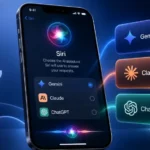


Gone are the days when artificial intelligence specialized in a single sense. Text, sound, image, video… Now, these systems integrate and process multiple types of data simultaneously. Imagine a virtual agent that sees a photo you send it and responds orally, understanding the visual context of your request. That’s the magic of multimodality. This versatility enhances the global understanding of each interaction. The “digital brain” thus surpasses the limitations of older specialized tools, offering a much richer and more nuanced perception. We’re moving from an AI that “knows” to an AI that “understands,” by fusing the senses.
Why This Technology is a Game-Changer?
The web generates colossal volumes of videos, audio recordings, and photos. Businesses must juggle these massive streams. Multimodal AI provides them with the tools to analyze this data in real-time, capture market trends, and even create much more immersive user experiences. Clearly, this is a radical shift in logic. “Classic” AI processed only one medium at a time. One model for text, another for vision. But with multimodal AI, everything merges: it gets closer to our human perception, where our senses work in concert to make sense of the world. This reduces misunderstandings in complex exchanges and offers a holistic view. And boom, everything changes.
Encoding
Each modality (text, image, sound) is first processed by a dedicated digital “expert.” It’s like translating each language into a format understandable by the AI.
Fusion
These “translated” representations then converge in a common space. Here, the AI establishes logical links between words, images, and sounds, creating a global understanding of the context.
Decoding
Finally, armed with this unified understanding, the AI generates the desired response or action. The result is consistent, precise, and most importantly, multi-format if needed.
Multimodal AI in Your Daily Life (and for Businesses)
So, what does this concretely mean for you and the businesses around you?
Marketing and Content Creation: The End of Silos
For creative teams, it’s a Swiss Army knife. From a simple text, multimodal AI generates visuals, short videos, product descriptions. Goodbye endless back-and-forths! Execution speed becomes a major asset, allowing dozens of campaign variants to be tested and messages to be endlessly personalized. Sophie, a PM at a startup, can now launch a multichannel campaign in a fraction of the time.
Sales and Customer Experience: Immersion First
Imagine a virtual assistant capable of analyzing a photo of your living room to recommend perfectly matching furniture or accessories. No more tedious searches. From luxury brands to e-commerce retailers, these tools enrich the purchasing journey. Augmented reality, combined with multimodal AI, transforms your website into an interactive store. You gain confidence before buying, and the experience is smoother. It’s almost as if the salesperson sees what you see, in real-time.
⏪ Before
The customer searches for a product, having to describe it in writing or using filters. The virtual assistant only understands text and provides generic responses.
⏩ Now
The customer sends a photo or video of the desired product. Multimodal AI analyzes the image, understands the request, and suggests precise options, even compatible accessories. The experience is personalized and intuitive.
Training and Human Resources: Learning Differently
Creating educational materials, often a headache, becomes child’s play. Brief the AI, and it generates explanatory videos, interactive tutorials, and audio modules. For HR departments, this is a huge productivity gain. Employee upskilling accelerates, with visual and auditory learning paths tailored to each individual. This harmonizes internal processes, including for small and medium-sized enterprises. Beyond these direct applications, multimodal AI opens unexpected doors. In healthcare, it can assist with diagnosis by cross-referencing medical images, textual history, and oral descriptions of symptoms. For accessibility, it can describe images and videos for visually impaired individuals, or translate conversations into sign language.
✅ Pros
⚠️ Challenges
What’s Next? AI That Sees, Hears, and Speaks
In five years, multimodal AI will be ubiquitous, yet seamlessly integrated. Your voice assistants won’t just answer your questions; they’ll understand your sound environment, analyze your facial expressions via your webcam to detect your mood. They will become true interlocutors, capable of navigating between text, image, and sound with startling fluidity. The risk? Hyper-personalization that can sometimes be intrusive, raising privacy concerns. The opportunity? Assistance so intuitive it will blend into our daily lives, making digital more human than ever. Will we be ready for this multi-sensory intelligence?
Chargement de la galerie…

About Rigaud Mickaël
Passionate about tech and a Linux enthusiast, I decipher AI with a unique and intense vision to make it useful to all, between robots, rock and the geek universe.