















Publié : 10 October 2025
Actualisé : 1 month ago
Fiabilité : ✓ Sources vérifiées
Je mets à jour cet article dès que de nouvelles informations sont disponibles.
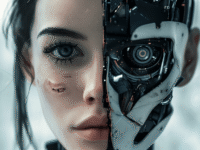
Summary: Please note: The alliance between AI and cybersecurity is the superpower that IT security has been waiting for. Recent trends in artificial intelligence make it possible to automate threat detection and improve incident response. By integrating these advances, companies can strengthen their security posture and better anticipate potential attacks. AI is thus proving to be an indispensable ally in protecting information systems against increasingly sophisticated threats
AI Cybersecurity: Artificial Intelligence for IT Security 🛡️
When AI automation in the cybersecurity sector becomes your best ally against hackers
📋 Sommaire
- AI Cybersecurity: Artificial Intelligence for IT Security 🛡️
- 💡 What you need to know
- 🔍 When AI becomes a digital detective
- AI's cybersecurity superpowers: your new ultimate shield! 🛡️🤖
- ⚠️ But beware… AI also has its dark side
- 🚨 When AI becomes the enemy
- 🛡️ Solutions that work (really work!)
- 🎯 Real-life use cases
- 📊 The numbers that speak
- 🔮 The future? The future is now!
- 🌟 Predictions for 2025-2026
- 💡 My tips for getting started
- 🚀 Where to start?
- 🎉 In conclusion
- 🎥 Explanatory Video
💡 What you need to know
The alliance between AI and cybersecurity is the superpower that IT security has been waiting for. Gone are the days of old-fashioned vulnerability detection; AI has arrived and is automating all that at breakneck speed, making our systems more reactive to threats. What if malware shows up? The AI will catch it in real time! That’s the good news. But the other side of the coin is just as real. While AI is a formidable weapon in the right hands, cyber-criminals are not afraid to use it for their own dirty tricks. As a result, war has been declared, and it’s going to get hot!
🔍 When AI becomes a digital detective
Just imagine: you’ve got thousands of lines of code to check for security flaws. It used to take a team of experts weeks (or even months!). Today? AI can do it in a matter of hours, thanks to machine learning . Basically, it’s your own personal investigator, but in robot form and without the insomnia! 🕵️♂️
AI’s cybersecurity superpowers: your new ultimate shield! 🛡️🤖
- Ultra-fast malware detection AI: identify vulnerabilities in record time
- 24/7 IT security automation: never a lunch break for AI!
- Continuous learning: the more attacks it sees, the stronger it becomes
- Data correlation: it connects the dots that we humans often miss
According to a fresh study by Cybersecurity Insiders , 87% of companies have already put AI to work for their cyber security. And frankly, they’re right! Artificial intelligence is becoming a must-have for CISOs
⚠️ But beware… AI also has its dark side
🚨 When AI becomes the enemy
Le Clusif (you know, the French association of cybersecurity pros) sounded the alarm at the end of January. Their observation? Hackers are also using AI, and it sucks big time! 😱
In concrete terms, here’s what they’re doing with AI (and it’s not pretty)
🐛 Tailor-made malware
LLMs (Large Language Models) can generate customized malicious code. It’s like having an evil developer working for you 24/7.
📧 Hidden injections
Invisible instructions in emails that fool automatic processing AIs. Clever, but really vicious!
🛡️ Solutions that work (really work!)
Well, we’re not going to take this lying down, are we? Here’s how smart companies are using AI intelligently in cybersecurity
🎯 Real-life use cases
Microsoft Defender: Cybersecurity automation for the benefit of all
Microsoft has integrated AI into its antivirus software. The result? Defender now detects 99.9% of threats in real time, thanks to its AI-based malware detection system. Not bad for something that runs in the background!
Darktrace: machine learning that learns your network by heart
Darktrace uses artificial intelligence to create a“map” of your network. As soon as something weird happens, it detects it. It’s like having a bodyguard who knows all your habits, thanks to AI, so you can fight cyber-attacks effectively!
📊 The numbers that speak
| Metric | Before AI | With AI |
|---|---|---|
| Fault detection time | 2-4 weeks | 2-4 hours 🚀 |
| False positive rate | 25-30% | 5-8% 🎯 |
| Cost of cybersecurity | 100% baseline | –40% 💰 |
💬 Testimonial: “Since we integrated AI into our SOC (Security Operations Center), we sleep better at night. Alerts are more accurate, and we can focus on real threats instead of chasing ghosts.” – Judith B., CISO at TechCorp
🔮 The future? The future is now!
So, what lies ahead in this cyber war where AI plays both sides? According to the experts at Gartner, here are the trends to watch
🌟 Predictions for 2025-2026
- 🤖 Conversational AI: ChatGPT and co. integrated directly into security tools
- 🔄 Auto-healing: systems that repair themselves after an attack
- 🎭 Security deepfakes: AI that creates fake users to fool hackers
 But hey, let’s keep our feet on the ground… AI is cool, but it’s no substitute for a good old-fashioned security plan 😉
💡 My tips for getting started
🚀 Where to start?
You don’t need to be a genius to integrate AI into your cybersecurity strategy. Here are my on-the-ground tips
- Start small: test first on a reduced perimeter (like a web server)
- Train your teams: AI without skilled humans is like a Ferrari without a driver
- Measure everything: before/after, detection rate, response time… KPIs are life!
- Stay humble: AI can fail too (and sometimes spectacularly 😅)
🎯 Pro tip: Start with SonarQube or Checkmarx tools for code analysis. They already integrate AI and are super easy to use!
🎥 Explanatory Video
Video automatically selected to enrich your reading



0 Comments