















Publié : 18 December 2025
Actualisé : 15 hours ago
Fiabilité : ✓ Sources vérifiées
Je mets à jour cet article dès que de nouvelles informations sont disponibles.
The story of Intermarché and its “unloved” wolf perfectly illustrates the complexity of AI adoption in marketing. After riding the emotional wave of a non-AI advertisement, the brand backpedaled on a photomaton project using this technology. A simple marketing misstep or a symptom of a deeper distrust of AI? My analysis: it’s a bit of both, and it deserves our attention.
📸 The AI Photomaton: An Idea That Died Quickly
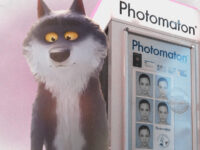
Intermarché had initially planned to deploy photomatons in its stores, allowing customers to have their picture taken virtually with the wolf, the star of their Christmas advertisement. This partnership with the Me Group, owner of Photomatons, would have added a touch of modernity to the customer experience, capitalizing on the viral success of the advertising campaign. The idea seemed appealing on paper: extend the emotion aroused by the film, offer a fun experience and generate shareable content on social media.
However, this is where the problem lies. The announcement of the use of AI for this project triggered a wave of criticism, forcing Intermarché to reconsider its strategy. The brand finally invoked a question of “coherence” with the message of its advertisement, which highlighted values of authenticity and simplicity, in opposition to the sophistication of AI.
🐺 The “Mal-Aimé” (Unloved): A Symbol of a Counter-Trend?
Intermarché’s advertisement, featuring a wolf rejected by the other animals in the forest, struck a chord with the public. Its success is based on a careful aesthetic and an emotional narrative, all without ostentatious digital special effects. This artistic choice was perceived as a return to basics, a valorization of authenticity in a world saturated with computer-generated images.
Intermarché renonce au projet de Photomaton avec le loup, après un bad buzz lié à l’usage de l’IA. L’enseigne invoque une « cohérence » avec son film publicitaire sans IA, Le Mal-Aimé, plébiscité depuis sa révélation du 6 décembre 2025.
Intermarché’s decision to abandon AI in its photomatons can therefore be interpreted as taking into account this public sensitivity. By capitalizing on the success of its “AI-free” advertisement, the brand seeks to strengthen its brand image, in line with the values of authenticity and proximity it wishes to convey.
⚙️ AI: A Tool to Handle with Care
This case raises important questions about the use of AI in marketing and communication. While AI offers undeniable creative and technical possibilities, it must be handled with care, taking into account the expectations and perceptions of the public. The Intermarché case shows that inappropriate use of AI can generate a bad buzz and harm the brand image. From an engineering perspective, we must consider that the implementation of AI, however powerful, must be aligned with the overall message of the brand.
Key Point: AI is not a silver bullet. Its adoption must be thoughtful and consistent with the brand’s values.
The “scale factor” is also to be considered: if AI allows for personalization on a large scale, it can also standardize the experience and erase the human aspect, which can be perceived negatively by consumers.
🔮 Projection and Risks
Optimistic Scenario: The Intermarché incident serves as a lesson to the marketing industry. Brands learn to use AI more ethically and transparently, focusing on creating value for the consumer rather than simply automating. AI becomes a tool in the service of human creativity, allowing to create personalized and engaging experiences, while respecting the values of authenticity and simplicity.
Pessimistic Scenario: Brands, obsessed with efficiency and cost reduction, continue to integrate AI intrusively and non-transparently into their marketing strategies. Consumers, increasingly wary of AI, turn away from brands that abuse this technology, preferring those that prioritize the human and the authentic. The attack vector of disinformation, amplified by poorly controlled AI, becomes a major risk for public trust in brands.
❔ Frequently Asked Questions
Why did Intermarché abandon its AI wolf photo booth project?




0 Comments