
















Publié : 18 December 2025
Actualisé : 15 hours ago
Fiabilité : ✓ Sources vérifiées
Je mets à jour cet article dès que de nouvelles informations sont disponibles.
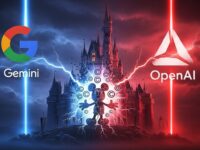
Google has just launched Gemini 3 Flash, an ultra-fast version of its language model, designed to replace Gemini 2.5 Flash. The goal? To surpass OpenAI and its ChatGPT 5.2 Instant. While the promise of increased performance is tempting, doesn’t this race for power risk sacrificing stability and trust? My expert analysis.
🚀 Gemini 3 Flash: The Speed Race
Gemini 3 Flash is presented as Google’s “standard” LLM (Large Language Model), the one that will answer the majority of user queries. The main argument is its increased speed and improved relevance compared to its predecessor, Gemini 2.5 Pro. It is supposed to be more efficient in terms of computing power and energy impact, thus positioning itself as a direct competitor to OpenAI’s ChatGPT 5.2 Instant.
Google’s announcement is radical: Gemini 2.5 Flash is immediately withdrawn from service. This is a risky bet, but one that demonstrates great confidence in its new product. This strategy contrasts with that of OpenAI, which had to reintroduce an earlier version of ChatGPT after a launch deemed chaotic of a new version.
Key Point: Google is betting on speed and energy efficiency with Gemini 3 Flash to surpass OpenAI.
🌐 Gemini serving the Web
The integration of Gemini 3 Flash is not limited to Google applications. The model is also deployed by default in the “AI Mode” of Chrome, a feature, currently unavailable in France, which allows you to browse the web via prompts in natural language. Google hopes to popularize this new approach to web browsing, competing with tools like ChatGPT Atlas or Comet from Perplexity.
However, this integration raises questions. If Gemini 3 Flash is faster, is it also as accurate and reliable as its predecessor in complex language understanding tasks? Speed should not come at the expense of the quality of responses.
⚖️ The challenges of inference and the value chain
The engineering perspective behind this launch is interesting. Google seems to favor a model architecture optimized for fast inference. This means that the emphasis is on the model’s ability to generate responses quickly, even if it means a compromise on the complexity of the model itself. The scale factor is therefore less important here than optimizing the value chain, from the user’s request to the model’s response.
However, this is where the shoe pinches. If Gemini 3 Flash is optimized for speed, what about its robustness against attack vectors, such as malicious prompts or attempts to “jailbreak” it? A smaller, faster model may be more vulnerable. Furthermore, the cost of the infrastructure required to support a massive volume of ultra-fast queries should not be overlooked. The promise of increased energy efficiency will have to be proven under real conditions.
Today, with Gemini 3 Flash, Google claims that its new “standard” model is capable of delivering more relevant, and much faster, results than Gemini 2.5 Pro.
This point of view raises the question of transparency. Google communicates about speed and efficiency, but remains discreet about the technical details of Gemini 3 Flash. What is the exact architecture of the model? What optimization techniques are used? Without this information, it is difficult to objectively evaluate the real performance of the model.
🔮 Projection and Risks
Optimistic scenario: Gemini 3 Flash becomes the standard for conversational AI. Its speed and energy efficiency allow for the massive adoption of AI in everyday applications, making information and assistance accessible to everyone, everywhere, at any time. AI becomes a transparent and intuitive tool, integrated into our lives without friction.
Pessimistic scenario: The race for speed comes at the expense of quality and security. Gemini 3 Flash, although fast, proves to be less reliable and more vulnerable to attacks. Users’ trust in AI decreases, hindering its adoption and paving the way for malicious uses. The market concentration in the hands of a few players (Google, OpenAI) is accentuated, stifling innovation and diversity.
❔ Frequently Asked Questions
Gemini 3 Flash, what is it basically?




0 Comments