




















Publié : 6 December 2025
Actualisé : 18 hours ago
Fiabilité : ✓ Sources vérifiées
Je mets à jour cet article dès que de nouvelles informations sont disponibles.
📋 Table of Contents
- 🤖 The Coca-Cola Experiment: When AI Takes the Reins of the Sleigh
- 🤔 The Creative Limits of AI: A Spark of Originality or a Flash in the Pan?
- 🏭 Industrial Stakes: AI, an Ally or a Competitor for Creatives?
- ✅ Lessons Learned: How Can Brands Use AI Wisely?
- 📊 Comparing Advertising Approaches: AI vs. Tradition
The holiday season is synonymous with traditions, warm moments shared, and, of course, Coca-Cola’s iconic advertisements. This year, the Atlanta-based company chose a bold approach: integrating artificial intelligence (AI) into the heart of its Christmas campaign. While the intention was to modernize the brand’s image and spark wonder, the result has been met with mixed, even critical, reception, raising crucial questions about the role of AI in advertising creation and the impact on brand authenticity.
🤖 The Coca-Cola Experiment: When AI Takes the Reins of the Sleigh
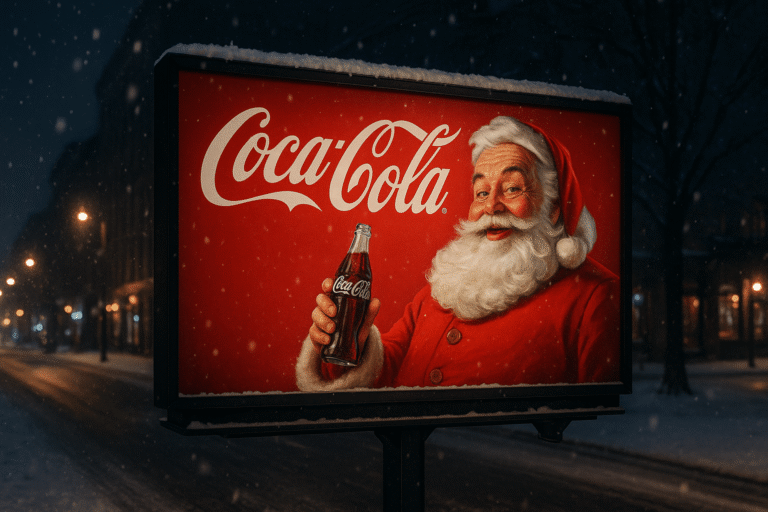
Coca-Cola unveiled a series of AI-generated visuals featuring Santa Claus in surreal and futuristic environments. The stated goal was to breathe new life into traditional Christmas iconography, leveraging the power of AI to create unprecedented and captivating images. However, this initiative quickly divided opinion, with some praising the innovation and creativity, while others lamented a lack of soul and authenticity.
The campaign was deployed across various digital platforms, including social networks and websites, aiming to reach a broad and diverse audience. The use of AI was intended to personalize messages and create a more immersive experience for consumers. However, the contrasting reactions highlighted the challenges and risks associated with integrating AI into mass marketing.
🤔 The Creative Limits of AI: A Spark of Originality or a Flash in the Pan?
One of the main criticisms leveled at the Coca-Cola campaign is the lack of genuine creativity. While AI can generate technically impressive images, it struggles to reproduce the emotion and depth that characterize human creations. The visuals produced by AI were deemed artificial, even impersonal, lacking the warmth and nostalgia associated with traditional Christmas advertisements.
Furthermore, the use of AI raises ethical questions regarding intellectual property and transparency. AI algorithms are trained on massive datasets, often without the consent of the original creators. This poses copyright and potential plagiarism issues. Moreover, it is essential that brands are transparent about the use of AI in their advertising campaigns, in order to avoid misleading consumers.
🏭 Industrial Stakes: AI, an Ally or a Competitor for Creatives?
The integration of AI into advertising represents a major challenge for the creative industry. While AI can automate certain tasks and reduce production costs, it also risks marginalizing human creatives. Advertising agencies and brands must strike a balance between using AI and valuing human talent, in order to preserve the quality and originality of creations.
AI can be a powerful tool to improve the effectiveness of advertising campaigns, by enabling more precise targeting of audiences and personalization of messages. However, it should not be seen as a substitute for human creativity. Brands must invest in training their teams and encouraging collaboration between creatives and AI experts, in order to make the most of this technology.
✅ Lessons Learned: How Can Brands Use AI Wisely?
The Coca-Cola Christmas campaign highlights the opportunities and challenges associated with using AI in advertising. To succeed, brands must adopt a strategic and thoughtful approach, taking into account the following considerations:
- Define clear objectives: Before integrating AI into an advertising campaign, it is essential to define precise and measurable objectives. What message does the brand want to convey? What is the target audience? What are the expected results?
- Prioritize quality over quantity: AI can generate a large amount of content quickly, but it is important to ensure the quality and relevance of this content. Brands must invest in human oversight and curation, to ensure that messages are consistent and in line with their image.
- Be transparent: Brands must inform consumers about the use of AI in their advertising campaigns. Transparency builds trust and avoids accusations of manipulation.
- Value human creativity: AI should not be seen as a substitute for human creativity, but as a tool to amplify it. Brands must encourage collaboration between creatives and AI experts, to create innovative and engaging advertising campaigns.
In conclusion, the Coca-Cola Christmas campaign is a telling example of the challenges and opportunities associated with using AI in advertising. While AI can bring considerable benefits in terms of efficiency and personalization, it should not be used lightly. Brands must adopt a strategic and thoughtful approach, prioritizing quality, transparency and the valorization of human creativity.
📊 Comparing Advertising Approaches: AI vs. Tradition
The table below contrasts traditional advertising approaches with those using artificial intelligence, highlighting the strengths and weaknesses of each:
| Characteristic | Traditional Advertising | AI Advertising |
|---|---|---|
| Creativity | Dominated by human ingenuity, emotion, and experience. | Algorithmically generated, potentially innovative but sometimes impersonal. |
| Cost | Can be high, depending on talent and resources. | Potentially more economical in the long term through automation. |
| Personalization | Limited to market segments. | Highly personalized, based on individual data analysis. |
| Authenticity | Perceived as more authentic because created by humans. | Can seem artificial or manipulative if poorly executed. |
| Speed | Slower creation process. | Fast production and adaptable in real-time. |
This table illustrates that AI does not entirely replace the traditional approach but offers complements and alternatives, each with its own advantages and disadvantages.
Key Point: The successful integration of AI in advertising requires a balance between technology and human creativity to avoid sacrificing authenticity and emotion.
❔ Frequently Asked Questions
Coca-Cola used AI for its Christmas ad, what’s the problem?




0 Comments