
















Publié : 6 December 2025
Actualisé : 1 day ago
Fiabilité : ✓ Sources vérifiées
Je mets à jour cet article dès que de nouvelles informations sont disponibles.
📋 Table of Contents
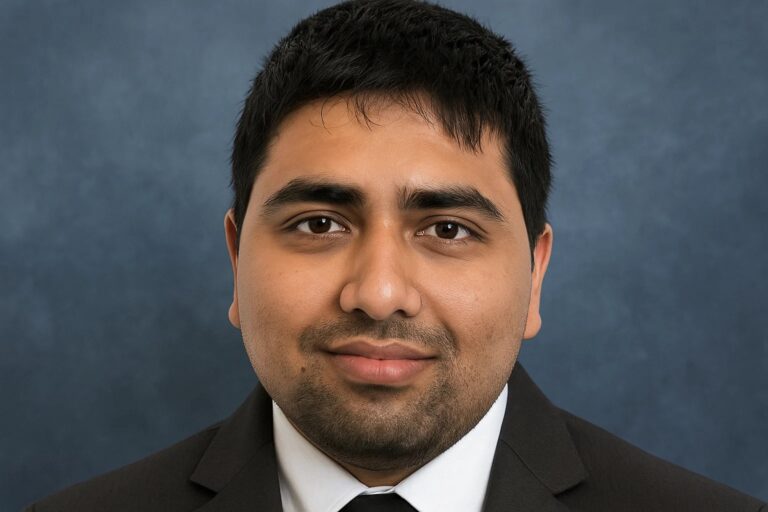
In a bold move to revitalize its artificial intelligence strategy, Apple has announced significant changes to its leadership. John Giannandrea, who has orchestrated Apple’s AI strategy since 2018, will step down in the spring of 2026. To fill this void and inject new momentum, Apple has recruited Amar Subramanya, a former executive at Microsoft AI. This appointment signals a clear desire on Apple’s part to accelerate its development in the field of generative AI and position itself as a major player in the face of increasingly strong competition.
🤖 New Leadership for a New Era
The passing of the torch between John Giannandrea and Amar Subramanya symbolizes a break with the past and a projection into the future. Giannandrea, who arrived from Google in 2018, was tasked with modernizing Siri and repositioning Apple in the AI race. However, the rapid rise of generative AI, embodied by tools like ChatGPT, has highlighted Apple’s shortcomings in this area. The difficulties encountered during the launch of Apple Intelligence, the successive postponements of the Siri redesign, and an internal reorganization have weakened Giannandrea’s position. His departure, although gradual, marks the end of an era.
The arrival of Amar Subramanya, directly from Microsoft AI, is a strong signal sent by Apple. As Corporate Vice-President at Microsoft, Subramanya played a key role in the development of generative AI. His experience and expertise will be used to drive Apple’s new artificial intelligence strategy. Under the supervision of Craig Federighi, Subramanya will be responsible for Apple’s language models, fundamental AI research, engineering, security, and the integration of these technologies into Apple products. His impressive track record, with 16 years spent at Google working on the early versions of Bard and Gemini, demonstrates his ability to innovate and tackle the complex challenges of AI.
Key Point: The arrival of Amar Subramanya marks a strategic turning point for Apple, which aims to accelerate its development in generative AI and catch up with its competitors.
📈 The Stakes of Apple’s New Strategy
Apple has great ambitions for its new AI strategy. The main goal is to “stimulate the innovation of Apple Intelligence” and integrate advanced AI features into all of its products. To achieve this goal, Apple plans to:
- Launch a completely redesigned version of Siri as early as spring 2026.
- Introduce hybrid models, combining processing in the cloud and locally.
- Conclude a partnership with Google to integrate Gemini, a high-performance generative AI solution.
- Enrich iOS 27 with AI tools comparable to those offered by its competitors.
These initiatives demonstrate Apple’s desire to catch up and offer user experiences enhanced by AI. However, there is still a long way to go. Apple will have to overcome significant technical and strategic challenges to achieve its goals.
⚔️ The Landscape of Key Players
The AI race is on, and Apple faces fierce competition. Microsoft, Google, OpenAI, and Anthropic are all major players investing heavily in this area. To stand out, Apple intends to rely on its historical strengths:
- The power of its Apple Silicon chips.
- The mastery of its hardware chain.
- The vertical hardware/software integration.
- A vast ecosystem of products already compatible with AI.
These competitive advantages could allow Apple to offer innovative AI solutions tailored to the needs of its users.
📊 Comparison of AI Players
To better understand the forces at play, here is a comparative table of the main AI players:
| Player | Strengths | Weaknesses | Flagship Products |
|---|---|---|---|
| Apple | Hardware/software integration, product ecosystem, Apple Silicon chips | Lag in generative AI | Siri, Apple Intelligence (in development) |
| Microsoft | Massive investment in generative AI, partnership with OpenAI | Complexity of integrating AI into its products | Copilot, Bing AI |
| Expertise in research and development, advanced language models | Difficulty monetizing its innovations | Bard, Gemini | |
| OpenAI | State-of-the-art language models (GPT), open-source approach | Dependence on Microsoft for infrastructure | ChatGPT, DALL-E |
| Anthropic | Approach focused on AI safety and ethics | Fewer resources than other players | Claude |
Important: The year 2026 will be crucial for Apple, which will have to demonstrate its ability to catch up in AI and offer innovative solutions to its users.
🔮 The Future of AI at Apple: A Crucial Challenge
The recruitment of Amar Subramanya marks a new stage in Apple’s artificial intelligence strategy. The year 2026 will be decisive for the future of AI “made by Apple.” Apple’s ability to innovate, integrate AI into its products, and offer enhanced user experiences will be essential to remain competitive in a constantly evolving market. It remains to be seen whether this new direction will allow Apple to catch up and position itself as a leader in the field of AI.
❔ Frequently Asked Questions
Why is Apple changing direction with its AI?




0 Comments