



















Publié : 15 October 2025
Actualisé : 1 month ago
Fiabilité : ✓ Sources vérifiées
Je mets à jour cet article dès que de nouvelles informations sont disponibles.
📋 Sommaire
- 🎶 The Paradox of the Conductor-less Orchestra
- 🧪 Stuck in the Experimentation Lab
- 🤯 The Real Culprit: The Great Bazaar of Modern Marketing
- Key Point
- 💰 The Desire is There, the Checkbooks are Ready
- 🎯 The Future: Unify to Conquer
- ❓ Frequently Asked Questions
- If everyone is sold on AI, why are so few companies actually using it?
- So the problem is the technology is too complex?
- So what are companies looking for before investing in AI?
🎶 The Paradox of the Conductor-less Orchestra
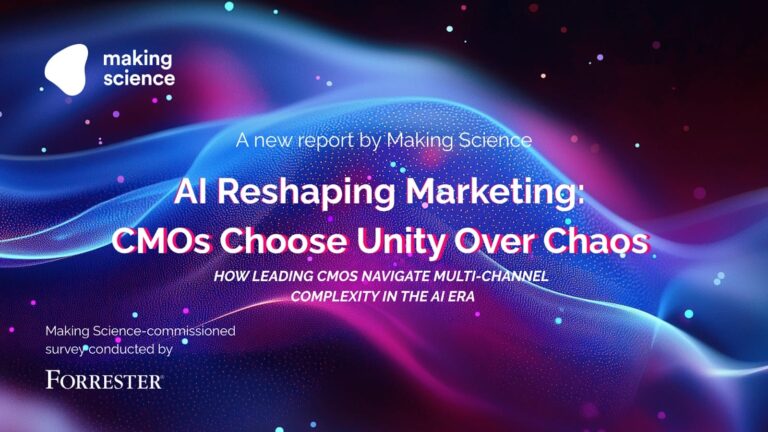
Picture a symphony orchestra. Every musician has a state-of-the-art instrument, capable of producing incredibly pure sounds. There are Stradivarius violins, Steinway pianos, platinum flutes… a veritable army of potential virtuosos. Yet, the sound that emerges is a cacophony. Why? Because there’s no conductor. Everyone is playing their own melody, in their own corner. This is the very picture painted by a new study from Making Science on the adoption of artificial intelligence in marketing .
The finding is almost comical if it weren’t so strategic: 95% of US Chief Marketing Officers (CMOs) see the positive impact of AI on their campaigns. That’s a landslide! And yet, brace yourselves, only 17% have truly integrated it into the core of their operations. We are witnessing a technological revolution that’s stuck at the starting line.
🧪 Stuck in the Experimentation Lab
The problem has a name: “pilot purgatory .” More than a third of companies (35%) are mired in this phase. They launch tests, proofs-of-concept, and isolated experiments. AI is used to optimize a campaign on one channel, automate a small task here, generate a few creatives there. It works, of course. The potential is there, palpable.
But these successes remain confined to their jars. They never evolve into a comprehensive strategy. It’s like discovering fire and only using it to light a single candle in a huge, dark room. The tool is powerful, but its deployment remains anecdotal, unable to illuminate the entire marketing strategy.
🤯 The Real Culprit: The Great Bazaar of Modern Marketing
So, what’s wrong? Why this reluctance to scale up? The answer is simple: complexity. The 2025 marketing ecosystem is a veritable labyrinth. The study reveals that 57% of CMOs are juggling seven or more active channels. Add to that the fact that 77% collaborate with at least two external agencies. The result is an extreme fragmentation of efforts and data.
It’s a genuine coordination headache. In-house teams try to piece things together, but the reality is stark: only 29% of companies effectively reuse their creative assets from one channel to another. Meanwhile, the demand for content has tripled. Teams are being asked to produce more, faster, for more channels, without being given the means to do so coherently.
Key Point
The main obstacle to AI adoption isn’t the technology itself, but operational fragmentation . Without a unified vision, even the most powerful AI tools are just point solutions in an ocean of disorganization.
💰 The Desire is There, the Checkbooks are Ready
Despite this gridlock, optimism remains high. Nobody wants to miss the AI train. The proof is that two-thirds of CMOs (66%) plan to invest in AI-based marketing platforms within the next 12 months. They are aware of the problem and are actively seeking solutions.
But their selection criteria are telling. It’s not the potential return on investment that comes out on top (56%), but rather the reputation and support offered by the vendor (61%). This is a strong signal: companies aren’t just looking for a tool; they’re looking for a guide. A partner who can help them bring order to their chaos and build a real integration strategy.
| Key Indicator | Percentage |
|---|---|
| CMOs seeing a positive impact from AI | 95% |
| CMOs with fully integrated AI | 17% |
| CMOs stuck in the pilot phase | 35% |
| CMOs planning to invest in AI | 66% |
🎯 The Future: Unify to Conquer
Ultimately, the study gets to the heart of the matter. The greatest expected benefit of AI, for 67% of CMOs, is real-time, cross-channel optimization. That’s the Holy Grail. And to achieve it, it’s not enough to just pile on more tools. You need a vision, a strategy, a conductor.
The lack of strategic coordination is today’s main obstacle. In an increasingly competitive environment, the ability to unify creative, media, and data will be decisive in standing out.
The next stage of the AI revolution in marketing will not be technological, but organizational. The challenge is no longer about whether to use AI, but how to integrate it so that all the instruments finally play the same tune, together. And that melody is one of performance and coherence.
❓ Frequently Asked Questions
If everyone is sold on AI, why are so few companies actually using it?
So the problem is the technology is too complex?
So what are companies looking for before investing in AI?




0 Comments